



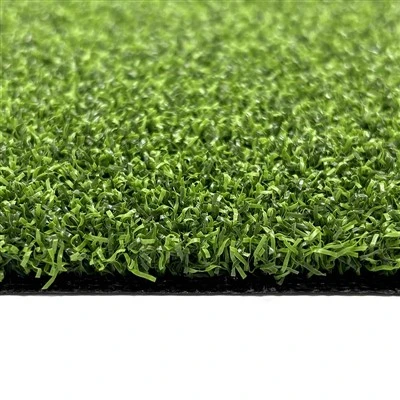
What Is Golf Turf?
Golf is an elegant sport that provides a sense of nobility, enjoyment, and relaxation. On golf courses, artificial turf is widely used due to its elasticity, softness, color stability, uniformity, and ease of maintenance.
Choosing the right artificial turf is crucial for the golf course experience. Synthetic putting green turf needs to meet the performance requirements for putting and swinging, aiming to replicate the putting speed of natural greens or even surpass it. Therefore, attention to detail is essential in the design and manufacturing of artificial turf, striving to achieve the same level of performance as natural grass.
Artificial turf offers advantages of low maintenance, durability, and controllability on golf courses. Unlike natural grass, it is less affected by weather conditions, seasons, and frequent use, ensuring consistent playing conditions.
In conclusion, artificial turf for golf courses showcases both aesthetic and practical characteristics while providing a top-quality playing experience. It is the ideal choice for golf facilities, enhancing the enjoyment of players.
Golf Turf Advantages
Year-round aesthetics:
With minimal maintenance required, artificial putting green turf maintains its lush green appearance throughout the year, adding a constant touch of beauty to your yard.
Enhanced fairness in competitions:
Each area of artificial golf turf can be customized to achieve consistent putting speeds, thereby enhancing fairness in competitions.
Long-term cost-effectiveness:
While there is an initial investment involved in installation, considering the expenses of regular upkeep, you will save money in the long run by reducing expenditures on seeds, fertilizers, pesticides, and water bills.
Easy maintenance:
Artificial putting green turf requires minimal special maintenance. Simple rinsing and occasional brushing are sufficient to keep your putting green in optimal condition.
Increased attractiveness:
A well-designed artificial putting green turf not only adds a beautiful focal point to your home but also attracts potential buyers when selling your property.



Why choose us
Our Factory
We have 20,000 square meters of artificial grass factory space and 27,000 storage space in Jiaxing, Zhejiang Province, which is equipped with advanced production equipments and processes, and has implemented a strict production management system in an effort to provide customers with high quality products.
Professional Consultation
Our experienced sales team has a wealth of specialized knowledge, including production processes, product qualifications, application areas, and regional market strategies, which allows us to recommend the most suitable products for your business and recommend appropriate design solutions to control prices and reduce costs according to your needs.
Competitive pricing
Our factories ensure competitive pricing in the marketplace by obtaining discounts on raw materials through large-scale purchasing, reducing costs through large-scale production, and adopting efficient production processes and technological improvements to reduce waste.
One-stop solution
Linwoo's extensive product line includes artificial landscape grass, artificial sports grass, fake green wall, artificial hedge, artificial fence, moss, etc., which can provide you with one-stop solution for landscaping and sports space.
Prompt and Economical Delivery
Linwoo has a global logistics network to ensure safe, economical and fast delivery of our products to our customers all over the world, and we will update the progress of the order in time to ensure that our customers are kept informed of the whole process of the products.
Fully Customized Services
Linwoo provides a full range of customization services and supports OEM and ODM. Linwoo can not only customize the products according to your design drawings, samples, etc., but also customize the products for you according to your market preferences and project needs.

Is turf better than grass for putting greens?
Yes, from a long-term cost-benefit perspective, putting green artificial grass is superior to natural grass for putting greens. Artificial putting green eliminates the need to wait for grass to grow, has low maintenance costs, provides excellent drainage, and maintains a pristine appearance year-round. They are also more durable and can be installed in various locations. While natural grass greens may offer more challenges and a sense of natural ambiance, synthetic putting green turf is a great choice for low maintenance and consistent putting surfaces. The ultimate choice depends on individual preferences, budget, and goals.
Golf Turf Types
Choose the plan that suits you best.
Putting Greens
Putting greens are specifically designed for the area around the hole, where the ball rolls smoothly and accurately. These areas require a high level of precision and consistency, so the turf used is typically very fine and closely cropped.
Tees
Tee areas are where players start each hole and need to withstand the repeated impact of club strikes. The turf in these areas is designed to be highly durable and resilient. Polypropylene (PP) or polyethylene (PE) materials are often chosen for their strength and ability to recover quickly after being struck by a golf club.
Fairways
Fairways are the main areas of play between the tee and the green. They require a balance of durability and playability. The turf in these areas is longer than on putting greens but shorter than in roughs.
Roughs
Roughs are the areas surrounding the fairways and are designed to penalize errant shots. The turf in these areas is typically longer and denser, making it more challenging for the ball to roll and for players to hit accurate shots. Polypropylene (PP) or a mix of polyethylene (PE) and polypropylene (PP) is often used to create the desired level of difficulty and texture.
Surrounding Areas
Surrounding areas include practice areas, backyard putting greens, and other informal playing spaces. The turf in these areas can vary widely depending on the intended use and budget.
How to install putting green?
Once these steps are completed, your artificial turf putting green will be ready, and you can start enjoying the golfing experience it provides.
Seam Treatment:
Use professional artificial turf adhesive and tape to connect different sections of the turf. This is crucial for the stability and durability of the putting green. Insert seam tape into the gaps between the artificial grass and secure it with turf nails to ensure a strong seam.
Edge Fixing:
Use adhesive and tape to secure the edges of the turf, enhancing the stability of the putting green. For added fixation, use a nail gun or turf nails to firmly lock the edges.

Infill Addition:
Infill helps maintain the shape and appearance of the turf and provides a natural and resilient feel. Evenly distribute the infill material over the turf and then use a power broom or stiff brush to brush it into the turf fibers, ensuring even distribution.
Turf Stabilization and Infill Settling:
After installation, allow the turf to naturally stabilize. Hose down the area and let it dry for at least 24 hours to ensure proper settling of the infill into the turf fibers. Avoid using the turf or walking on it during this period. After it is dry, brush the turf again to ensure the infill is fully embedded in the fibers.
Golf Turf Applications
Golf Courses:
Golf turf is most commonly and prominently used in golf courses. The turf is utilized to create well-manicured fairways, tee boxes, and putting greens, providing the course with a consistent surface that ensures ideal ball rolling and bouncing effects.
Driving Ranges:
Driving ranges provide golfers with a practice area for long-distance shots. The golf simulator turf provides a realistic and expansive surface for hitting balls, allowing golfers to adjust their swings and improve distance and accuracy. Additionally, the durability and resilience of the turf can withstand the impact of repeated ball strikes.
Putting Greens:
Artificial putting greens are key areas for practicing short game skills and utilize specially designed golf turf. This turf emulates the smooth and fast surface of real greens, enabling golfers to practice their putting techniques, read subtle green variations, and develop a delicate touch for their putts.
Residential Golf Areas:
Golf turf is commonly used in residential areas that have private golf courses or putting greens. These areas provide residents with the opportunity to enjoy golf within their own community. The turf ensures a high-quality playing surface, enhancing the aesthetics and appeal of residential golf facilities.
Commercial and Recreational Facilities:
Artificial golf turf finds application in commercial and recreational facilities that offer golf-related activities. This includes indoor golf centers, golf simulators, and mini-golf courses.
Sports Fields and Parks:
Its high quality and resilient surface make synthetic golf green suitable for activities such as soccer, baseball, and recreational areas. This versatility maximizes the value and usage of the turf.


Certifications
With over 10 years of development and manufacturing experience, our products are SGS and CE safety certified, free of lead, heavy metals and harmful chemicals, UV protected, flame retardant, REACH, RoHS compliant. They are also 50,000 wear and PFAS certified by state-of-the-art laboratories, super abrasion resistant and PFAS free.
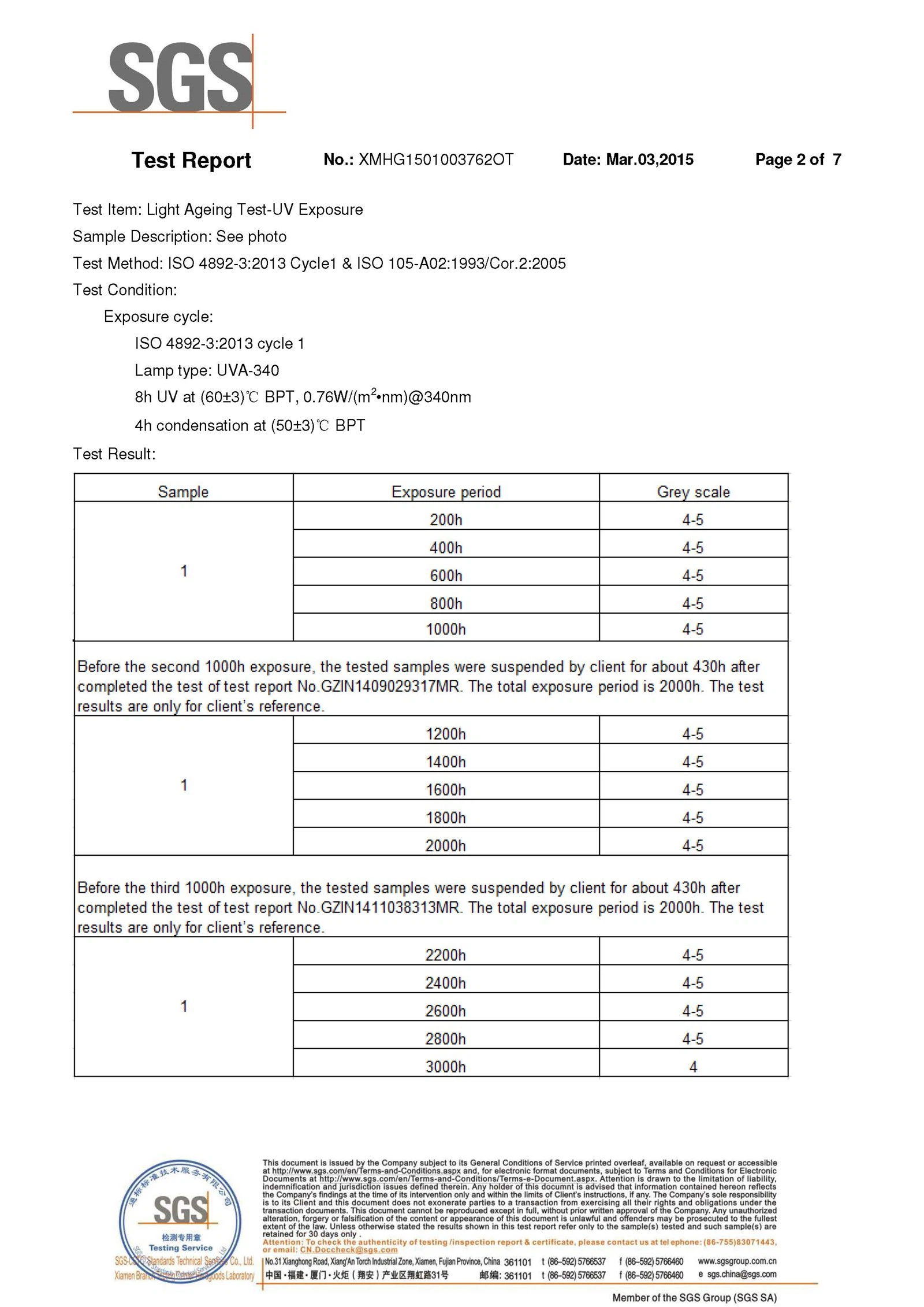
3000h Anti-UV Certification

Fire Resistance Certification

PFAS Free Certificate

Reach Certification

RoHS Certificate

50000 Times Wear Certificate

Leading Artificial Grass Factory
Founded in 2013, Linwoo is a leading artificial grass factory in China, we have 20,000 square meters of artificial grass factory and 27,000 storage space. We provide one-stop service from design, manufacturing, sales to installation. We specialize in providing high quality artificial green solutions to our global partners, including large project contractors, wholesalers, brand distributors, chain stores, e-commerce, and all different sales channel customers. Last year, we sold more than 6 million square meters of artificial turf. The products are exported to more than 100 countries and have gained a good reputation.
Production Experience
Artificial Grass Factory
Annual Output
Export Country
FAQ
Q: Are you a putting green artificial grass manufacturer?
Q: How long do artificial putting greens last?
Q: Is a artificial putting green turf more expensive than turf?
Q: How much does the average synthetic putting green cost to build?
The cost of an artificial golf turf includes expenses for design and planning, site preparation, procurement of artificial turf materials, installation of the artificial turf, and other related costs such as border materials, sand traps, and putting cups. The type and quality of the artificial turf can also impact the cost.
Higher-quality synthetic golf green typically comes at a higher price, but it closely resembles the appearance and performance of real grass. Therefore, when deciding to construct an synthetic golf green, it is advisable to consult with professional suppliers to obtain specific quotes and cost estimates.
Q: What is the best material for a synthetic putting green turf?
Q: What is the best base for a putting green?
Weathered granite is the best base for a putting green.
Weathered granite consists of granite blocks mixed with gravel and sand. Although it is more expensive compared to other options, it is a preferred choice when installing artificial putting green on a putting green. This material is highly permeable, allowing for more effective water drainage.
Crushed stone concrete subbase/road base is an economical option.
When selecting a base material, factors such as cost, climate conditions in your area, soil drainage capabilities, and desired aesthetic outcomes should be taken into consideration.
If the installation area is prone to water accumulation, then a drainage system can be considered.
Q: How to prepare the ground before install putting green?
Organic Matter Removal: Remove existing natural grass layers to ensure no roots, stems, or debris interfere with the installation process, creating a clean and even foundation for the turf.
Weed Barrier Installation: Lay a weed barrier or geotextile fabric to prevent weed and organic growth from penetrating the artificial turf, protecting the turf's base.
Base Layer Installation: Evenly spread a base material over the turf base. Decomposed granite is a popular choice due to its good permeability and drainage properties.
Ground Compaction: After the base layer is installed, compact the ground to establish a solid and stable foundation. Ensure that the turf base is slightly lower than the surrounding hardscape for drainage and aesthetic purposes.
Q: What is the best pile height for a artificial putting turf?
Q: Do you put sand on artificial putting green?
golf simulator turf, allowing you to fully enjoy the pleasure of playing golf.
Q: How to make golf simulator turf faster?
Design a Shorter Pile Height: Maintain a pile height between 1/2 inch and 3/4 inch, as a shorter pile height results in a more firm and compact surface.
Perform Regular Grooming: Regularly inspect and maintain the turf to keep the grass fibers in their original shape, and regularly clean the surface debris.
Compact the Surface: Regularly use a roller to compact the surface, making it more firm and solid.
Design Sloped Putting Greens: Sloping the putting green will enable the ball to roll faster.
Q: How do you maintain artificial grass in a putting green?
Check and maintain synthetic golf green speed: You can also add sand to the putting green before rolling it. If any new bare spots are found, additional sand can be added.
Use a soft-bristle push broom to level the sand: For putting green edges filled with sand, level the sand using a soft-bristle push broom. This will help maintain the turf's resilience.
Remove debris from the synthetic golf green: Clean up debris to prevent damage to the artificial turf putting green.
Q: Why is my artificial putting green bumpy?
Linwoo is committed to providing a one-stop service for artificial golf grass, including the design, production, sales and installation of artificial golf grass. To get a free estimate, free samples, our team is ready to help you - contact us today!
Q: What is the speed of turf on a synthetic golf green?
Fast artificial turf on a putting green turf usually consists of shorter and denser fibers, resulting in faster ball roll. This type of green is often used in professional tournaments or on golf courses that strive for high-performance playing surfaces.
Slow artificial turf on a putting green turf typically features longer fibers and wider cuts, resulting in slower ball roll. This type of green is often used for practice or by beginners, as the slower speed makes it easier to control the ball.
Q: Is the playing technique on artificial green turf the same as on natural grass?
Impact Sensation: Artificial putting green is typically slightly firmer than natural grass, which can affect the ball's elasticity and feel. The ball may have a faster rebound speed and less spin on artificial turf. Golfers may need to adapt to this different impact sensation.
Ball Position: The surface of artificial putting green is often more uniformly even than natural grass, providing a more stable ball position. This can affect the golfer's control over the height and angle of the shot.
Q: How long does it take to install a synthetic golf putting green?
Q: Does practicing on a synthetic turf putting green really improve my golf skills?
Haining Lingwo New Materials Co., Ltd. is well-known as one of the leading golf turf manufacturers and suppliers in China. If you're going to wholesale cheap golf turf, welcome to get more information from our factory. Also, custom service is available.
outdoor putting turf, backyard golf turf, golf turf