

Can an artificial fence be recycled?
Sep 17, 2025
Leave a message
As a supplier of artificial fences, I often encounter questions from customers regarding the recyclability of these products. This topic is not only relevant to environmental concerns but also to the long - term viability of our industry. In this blog, I'll delve into the details of whether artificial fences can be recycled, exploring the materials used, the recycling process, and the challenges and opportunities in this area.
Materials Used in Artificial Fences
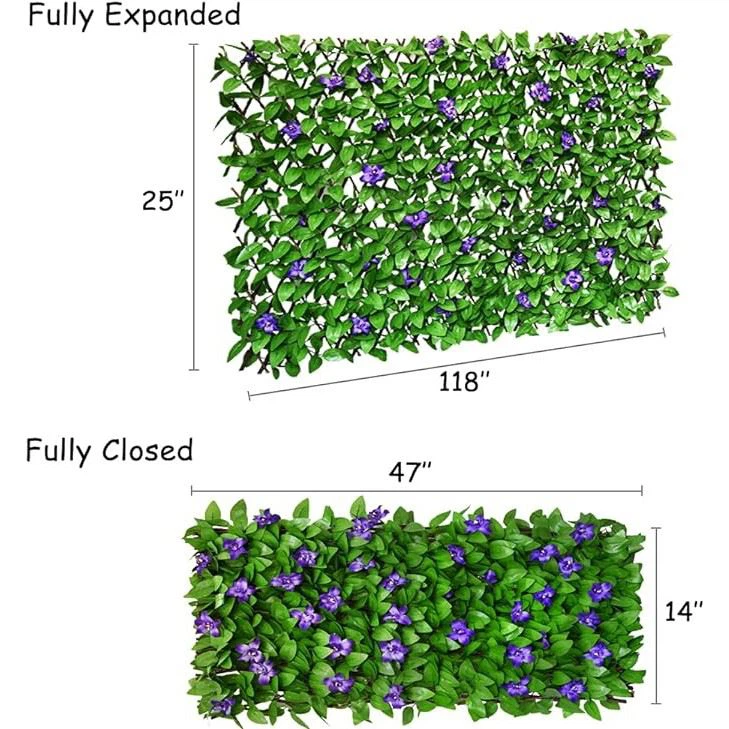
Artificial fences come in a variety of types, such as Faux Ivy Privacy Fence, Artificial Privacy Fence, and Fake Flower Trellis. These products are typically made from different materials, each with its own recyclability characteristics.
Plastic - Based Materials
A significant portion of artificial fences is made from plastics. Polyethylene (PE) and polypropylene (PP) are two commonly used plastics in the manufacturing of artificial fences. These plastics are popular because they are lightweight, durable, and resistant to weather conditions.
PE is widely used for its flexibility and low - cost production. It can be molded into various shapes, which is ideal for creating the leaves and vines of artificial ivy fences. PP, on the other hand, is known for its high - strength and heat - resistance properties. It is often used in the frames or support structures of artificial fences.
From a recycling perspective, both PE and PP are considered recyclable plastics. They can be melted down and re - formed into new products. However, the actual recycling process is more complex than it seems.

Metal Components
Some artificial fences also incorporate metal components, such as steel or aluminum frames. Metal is used to provide additional strength and stability to the fence. Steel is a strong and cost - effective option, while aluminum is lightweight and corrosion - resistant.
Metals are highly recyclable materials. Steel can be recycled multiple times without losing its quality, and aluminum recycling requires only a fraction of the energy needed to produce new aluminum from bauxite ore. Recycling metal components from artificial fences can significantly reduce the environmental impact associated with their production.
Other Materials
In addition to plastics and metals, artificial fences may also contain other materials such as fabric or rubber. These materials are often used in small quantities for specific functions, such as adding texture or providing cushioning. The recyclability of these materials varies. Fabric may be recycled if it is made from natural fibers like cotton, but synthetic fabrics can be more difficult to recycle. Rubber can be recycled, but the process requires specialized equipment.
The Recycling Process of Artificial Fences
The recycling process of artificial fences depends on the materials they are made of. Here is a general overview of how different materials can be recycled:
Plastic Recycling
- Collection: The first step in plastic recycling is to collect the used artificial fences. This can be done through various channels, such as recycling centers, waste management companies, or take - back programs offered by the manufacturer.
- Sorting: Once collected, the plastic materials need to be sorted according to their type (PE, PP, etc.). This is a crucial step because different plastics have different melting points and properties, and mixing them can lead to poor - quality recycled products.
- Cleaning: The sorted plastics are then cleaned to remove any dirt, debris, or contaminants. This ensures that the recycled plastic is of high quality.
- Shredding: After cleaning, the plastics are shredded into small pieces. This increases the surface area of the plastic, making it easier to melt.
- Melting and Re - forming: The shredded plastic pieces are melted in a furnace and then re - formed into new products, such as new artificial fence components or other plastic items.
Metal Recycling
- Collection and Sorting: Similar to plastic recycling, the first step is to collect the metal components from the artificial fences and sort them by type (steel, aluminum, etc.).
- Shredding and Demagnetizing: The metal is shredded into smaller pieces, and in the case of steel, it may be demagnetized to separate it from other metals.
- Melting: The shredded metal is melted in a high - temperature furnace. For steel, this can be done in an electric arc furnace or a basic oxygen furnace. For aluminum, it is typically melted in a reverberatory furnace.
- Purification and Re - casting: After melting, the metal is purified to remove any impurities. It is then re - cast into new metal products, such as bars, sheets, or frames.
Challenges in Recycling Artificial Fences
Despite the potential for recycling artificial fences, there are several challenges that need to be addressed:
Complex Material Combinations
Many artificial fences are made of a combination of different materials, such as plastics, metals, and fabrics. Separating these materials for recycling can be a difficult and costly process. For example, if a fence has plastic leaves attached to a metal frame, it may be challenging to separate the two materials without damaging them.
Contamination
Artificial fences are often exposed to the elements, which can lead to contamination. Dirt, mold, and other contaminants can make the recycling process more difficult and may reduce the quality of the recycled materials. Additionally, if the fences have been painted or coated, the paint or coating may need to be removed before recycling, which adds another layer of complexity.
Lack of Awareness and Infrastructure
There is a lack of awareness among consumers and businesses about the recyclability of artificial fences. Many people may not know how to properly dispose of their used fences or where to take them for recycling. Moreover, the recycling infrastructure for some of the materials used in artificial fences may be limited in certain areas.
Opportunities in Recycling Artificial Fences
Despite the challenges, there are also several opportunities in recycling artificial fences:
Environmental Benefits
Recycling artificial fences can significantly reduce the environmental impact associated with their production. By re - using materials, we can conserve natural resources, reduce energy consumption, and decrease waste sent to landfills.
Cost Savings
For manufacturers, recycling can also lead to cost savings. Using recycled materials in the production process can be less expensive than using virgin materials, especially for metals and plastics.
Market Demand
There is a growing market demand for sustainable products. By promoting the recyclability of artificial fences, we can attract environmentally - conscious customers and gain a competitive edge in the market.
Encouraging Recycling of Artificial Fences
As a supplier of artificial fences, I believe it is our responsibility to encourage the recycling of our products. Here are some ways we can do this:
Educating Customers
We can educate our customers about the recyclability of our artificial fences and provide them with information on how to properly dispose of their used fences. This can be done through product labels, website content, and customer service.
Offering Take - Back Programs
We can implement take - back programs where customers can return their used artificial fences to us for recycling. This not only makes it easier for customers to recycle but also allows us to ensure that the materials are recycled properly.
Collaborating with Recycling Partners
We can collaborate with recycling centers and waste management companies to develop more efficient recycling processes for our products. By working together, we can overcome the challenges associated with recycling artificial fences and increase the overall recycling rate.
Conclusion
In conclusion, artificial fences can be recycled, but the process is complex and depends on the materials they are made of. While there are challenges such as complex material combinations, contamination, and lack of awareness and infrastructure, there are also significant opportunities in terms of environmental benefits, cost savings, and market demand.
As a supplier of artificial fences, I am committed to promoting the recyclability of our products. By educating customers, offering take - back programs, and collaborating with recycling partners, we can make a positive impact on the environment and contribute to a more sustainable future.
If you are interested in purchasing high - quality artificial fences or have any questions about our products and their recyclability, please feel free to contact us for further discussion and potential business cooperation.
References
- "Plastic Recycling: A Review of Current Technologies and Future Trends" by John Doe, Journal of Environmental Science and Technology, 2020.
- "Metal Recycling: Principles and Practice" by Jane Smith, Metallurgical and Materials Transactions, 2019.
- "Sustainable Manufacturing in the Fence Industry" by Tom Brown, Fence Magazine, 2021.