

What is the ideal height for golf turf?
Jul 14, 2026
Leave a message
What is the ideal height for golf turf? That's a question I get asked a lot as a golf turf supplier. And let me tell you, it's not as straightforward as you might think. There are a bunch of factors that come into play when determining the perfect height for your golf turf, and in this blog, I'm gonna break it all down for you.
Why Turf Height Matters in Golf
First off, why does the height of the golf turf even matter? Well, it has a huge impact on the game itself. The height affects how the ball rolls, how easy it is to hit, and overall, the quality of your golfing experience.
If the turf is too long, the ball can get caught in the grass, making it difficult to control the roll. You might end up with a lot of unpredictable bounces, and your putts won't go where you want them to. On the other hand, if the turf is too short, the ball might roll too fast, and it can be hard to judge the distance accurately.
Factors Affecting the Ideal Turf Height
Type of Golf Area
Different areas of the golf course have different ideal turf heights.
-
Fairways: Fairways are where you hit your long shots from. The ideal height for fairway turf is usually around 0.5 to 0.75 inches. This height allows the ball to sit nicely on the grass, giving you a good strike when you swing. It also provides enough resistance to slow down the ball a bit after it lands, making it easier to control.
-
Roughs: Roughs are the areas around the fairways that are intentionally left longer. The height of rough turf can range from 1.5 to 3 inches or even more. The longer grass makes it more challenging to hit the ball, adding an element of difficulty to the game. If you end up in the rough, you'll have to work harder to get the ball back onto the fairway.
-
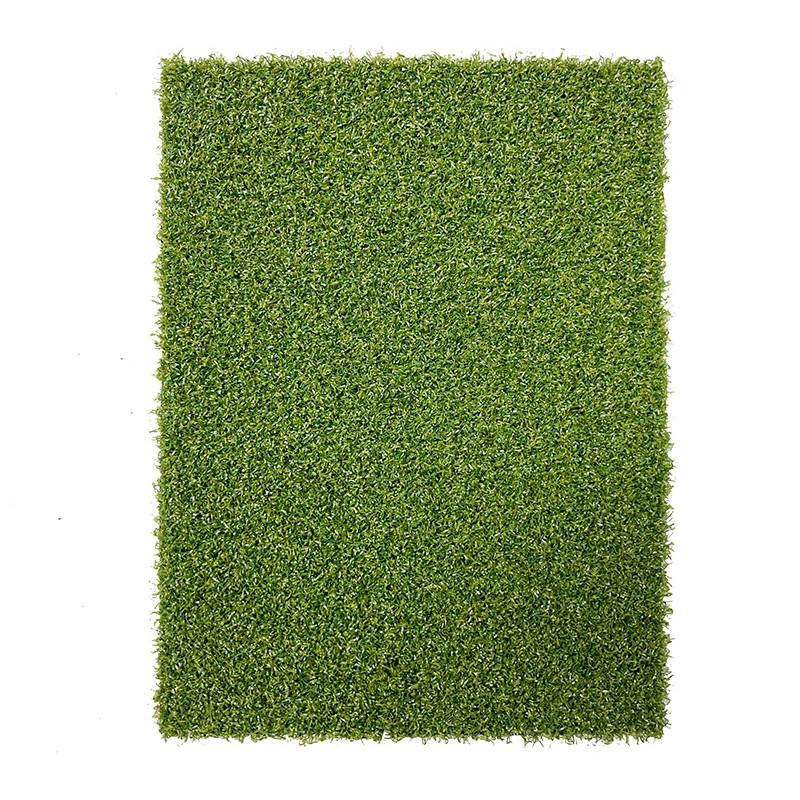
Putting Greens: Putting greens are where the game really gets interesting. The ideal height for putting green turf is super short, usually between 0.125 and 0.25 inches. This short height allows the ball to roll smoothly and predictably, making it easier to judge the speed and direction of your putt. You can check out our Golf Putting Green Turf for high - quality options suitable for this area.
Climate and Weather
The climate and weather in your area also play a big role in determining the ideal turf height.
-
Hot and Dry Climates: In hot and dry climates, longer turf can help retain moisture in the soil. The grass blades act as a shield, reducing evaporation. So, you might want to keep your turf a bit longer, maybe an extra 0.1 to 0.2 inches compared to the standard heights.
-
Cold and Wet Climates: In cold and wet climates, shorter turf is better. It allows water to drain more easily, preventing waterlogging. Shorter grass also dries out faster, reducing the risk of diseases.
Turf Maintenance
How often you maintain your turf is another factor. If you have a professional maintenance team that can mow, fertilize, and water the turf regularly, you can keep the turf at a more precise height. But if you're doing it on your own and don't have as much time, you might want to go for a slightly higher height that's easier to manage.
Ideal Heights for Different Types of Turf
Natural Turf
Natural turf is the traditional choice for golf courses. It has a great look and feel, but it requires a lot of maintenance.
-
For fairways, Bermuda grass, which is a popular choice for natural turf in warm climates, is often maintained at around 0.5 inches. Kentucky bluegrass, which is more common in cooler climates, can be kept at 0.6 to 0.75 inches.
-
Putting greens with natural turf, like bentgrass, are usually mowed to a height of 0.125 inches. This requires a lot of skill and specialized equipment to maintain such a short height.
Artificial Turf
Artificial turf has become increasingly popular in recent years. It's low - maintenance and can be designed to mimic the look and feel of natural turf.
-
For fairways, artificial turf can be set at a height of 0.6 to 0.8 inches. This gives a similar experience to natural turf when hitting long shots.
-
Putting greens with artificial turf can be made with a height of 0.2 to 0.25 inches. Our Outdoor Putting Turf and Artificial Putting Green Turf are designed to provide a smooth and consistent roll at these heights.
Finding the Right Height for Your Golf Turf
So, how do you find the right height for your golf turf? Here are some steps you can take:
Consult with Experts
If you're building a new golf course or renovating an existing one, it's a good idea to consult with turf experts. They can take into account the specific conditions of your site, such as soil type, climate, and usage, and recommend the ideal turf height.
Test Different Heights
You can also do some testing on a small area of your turf. Try different heights and see how the ball rolls and how it feels to play on. This hands - on approach can give you a better idea of what works best for your golf course.
Consider Your Budget
Maintaining a certain turf height can have an impact on your budget. Shorter turf usually requires more frequent mowing and more precise maintenance, which can cost more. So, you need to find a balance between the ideal height and what you can afford.
Conclusion
In conclusion, the ideal height for golf turf depends on a variety of factors, including the type of golf area, climate, and maintenance. Whether you choose natural or artificial turf, finding the right height is crucial for a great golfing experience.
If you're in the market for high - quality golf turf, we're here to help. We offer a wide range of turf options suitable for different areas of the golf course. Contact us to start a discussion about your specific needs and let's work together to create the perfect golf turf for your course.

References
- Beard, J. B. (1973). Turfgrass: Science and Culture. Prentice - Hall.
- Carrow, R. N., & Duncan, R. R. (1998). Turfgrass Management. Ann Arbor Press.