

How the 2026 World Cup Is Transforming Football Stadium Construction Across North America
Jun 17, 2026
Leave a message
Discover how FIFA World Cup 2026 is accelerating stadium modernization, turf innovation, sustainability initiatives, and smart venue development across North America.

Estadio BBVA. © Jorge Toboada, courtesy Populous
The FIFA World Cup has always been a powerful driver of infrastructure investment, but the 2026 edition is unlike any tournament the football industry has seen before. Hosted jointly by the United States, Canada, and Mexico, the event will feature 48 national teams and 104 matches, making it the largest FIFA World Cup in history.
For stadium developers, architects, contractors, turf specialists, and sports facility investors, the tournament represents much more than a sporting event. It is accelerating a new era of football stadium construction focused on sustainability, advanced turf systems, smart technologies, fan experience, and long-term venue adaptability.
Why the 2026 World Cup Is Different From Previous Tournaments
Unlike previous FIFA World Cups that required large numbers of newly built stadiums, the 2026 tournament is centered on transforming existing venues. Most host stadiums were originally developed for American football, baseball, concerts, or multi-purpose entertainment events rather than international football competitions. The scale of the tournament is unprecedented. According to FIFA, the expanded format will feature 48 teams and 104 matches, compared with 32 teams and 64 matches in previous editions. This dramatic increase places greater demands on venue flexibility, transportation systems, broadcasting infrastructure, and spectator services.
Rather than constructing entirely new facilities, host cities are focusing on strategic upgrades that deliver long-term value. This approach reduces environmental impact, improves financial sustainability, and creates a blueprint for future mega-events around the world.
The Shift From New Stadium Construction to Stadium Transformation
One of the most important trends emerging from the 2026 World Cup is the move toward renovation rather than replacement. Host venues in Los Angeles, Dallas, Atlanta, Toronto, Vancouver, and New York/New Jersey are already world-class facilities, making modernization a more practical solution than starting from scratch. Stadium owners are investing in seating reconfiguration, upgraded hospitality spaces, expanded media facilities, and improved pitch technology. This strategy allows cities to maximize return on investment while avoiding the challenges associated with underutilized post-tournament venues.
For contractors and stadium planners, this trend signals a growing demand for renovation expertise, adaptive reuse strategies, and infrastructure modernization projects that extend venue life cycles while improving performance.
How FIFA Standards Are Reshaping Stadium Design
Hosting a FIFA World Cup match requires compliance with some of the most demanding venue standards in global sport. Many North American stadiums were originally designed for American football and therefore require significant modifications to accommodate FIFA-approved pitch dimensions and runoff zones. These adjustments often involve removing seating sections, modifying field elevations, upgrading drainage systems, and redesigning player safety areas. Beyond the playing surface, FIFA requirements also influence locker rooms, broadcast infrastructure, hospitality facilities, accessibility standards, and security operations. As a result, the World Cup is acting as a catalyst for a broader evolution in modern stadium design.
The Grass Debate: Natural Turf vs Artificial Turf
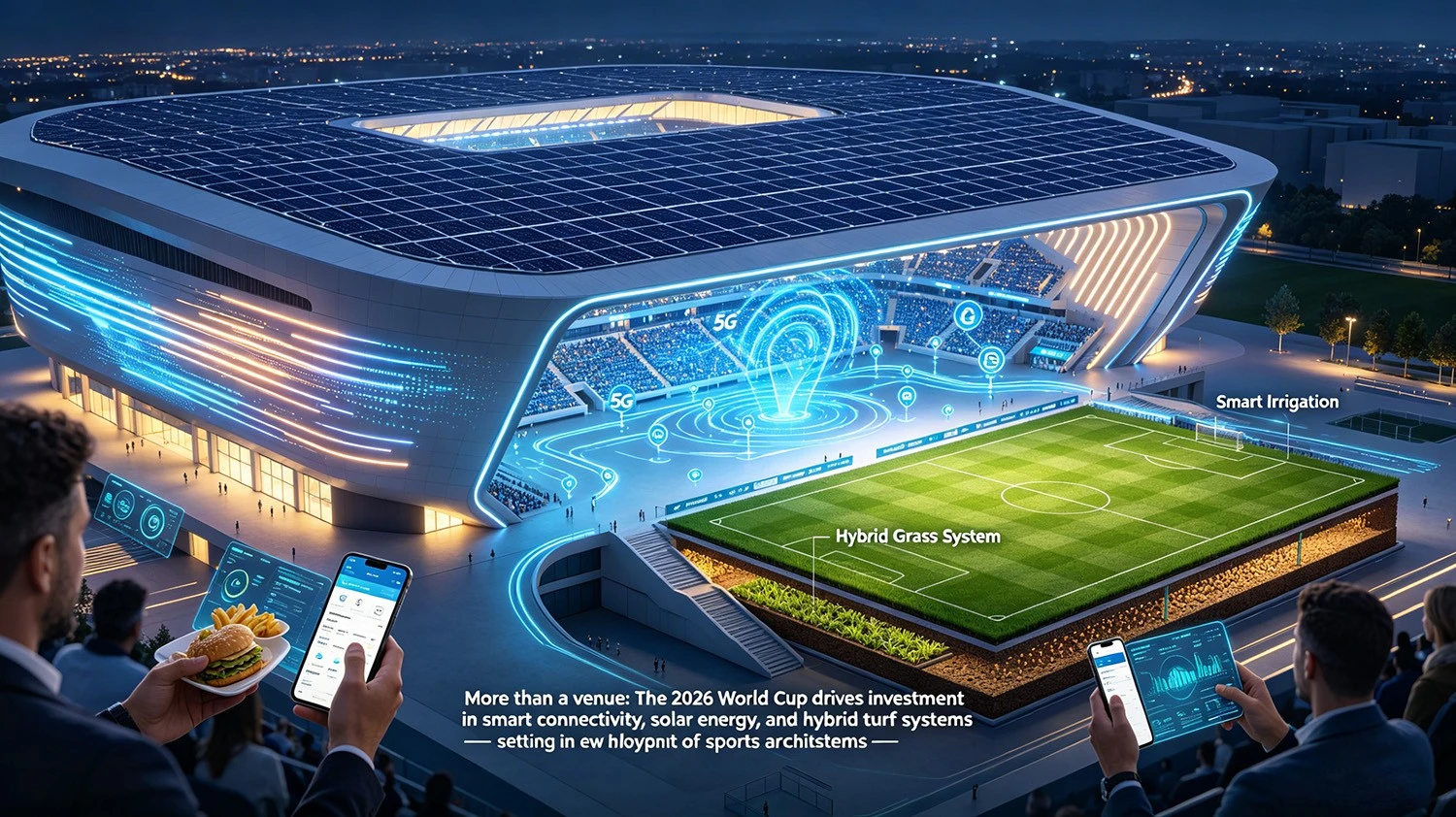
Perhaps no topic has generated more discussion than playing surfaces. FIFA requires natural grass pitches for World Cup matches, which means several host venues that traditionally use synthetic turf must install temporary or hybrid grass systems. These conversions involve extensive planning, engineering, irrigation design, and environmental control to ensure compliance with FIFA performance standards.
However, this requirement should not be interpreted as a decline in artificial turf demand. On the contrary, the tournament is accelerating innovation across the turf industry. While elite international competitions continue to favor natural grass, artificial turf remains the preferred solution for schools, community football complexes, training facilities, and multi-purpose sports venues. Modern synthetic turf systems now offer improved player safety, enhanced durability, reduced maintenance costs, and better environmental performance. For manufacturers such as Linwoo, the World Cup highlights the growing importance of hybrid systems, sustainable infill technologies, and next-generation football turf solutions.
Sustainability Is Becoming a Core Stadium Construction Requirement
Sustainability is no longer an optional consideration in sports infrastructure. The 2026 World Cup is encouraging host cities to adopt energy-efficient lighting systems, advanced water management technologies, recycled construction materials, and smart building management platforms. These investments reduce operational costs while supporting environmental goals.
Climate resilience is also becoming a priority. Stadium operators are preparing for rising temperatures through improved ventilation systems, cooling zones, shade structures, and enhanced drainage solutions. According to the United Nations Environment Programme (UNEP), buildings and construction account for approximately 37% of global energy-related carbon emissions, emphasizing the importance of sustainable infrastructure practices.
Technology Is Becoming as Important as Concrete and Steel
Modern football stadiums are evolving into highly connected digital environments. The 2026 World Cup is accelerating investments in high-density Wi-Fi networks, 5G connectivity, smart security systems, digital ticketing platforms, and real-time crowd management technologies. Today's supporters expect seamless digital experiences that allow them to access match information, mobile services, and interactive content throughout the venue.
Broadcasting requirements are also driving technological upgrades. Stadiums must support ultra-high-definition cameras, advanced analytics systems, augmented reality content, and complex media operations. As a result, digital infrastructure is becoming just as important as traditional construction materials in modern venue development.
Fan Experience Is Driving Stadium Investment
Today's football fans expect much more than a seat and a view of the pitch. Stadiums are increasingly designed as entertainment destinations featuring premium hospitality areas, improved accessibility, family-friendly amenities, diverse food and beverage offerings, and immersive digital experiences. This shift is reshaping investment priorities across the sports industry and encouraging venue operators to focus on long-term customer engagement.
Enhanced fan experiences not only improve satisfaction but also generate additional revenue opportunities. As competition for entertainment spending increases, creating memorable matchday experiences has become a critical component of stadium success.
Transportation Infrastructure Is Becoming Part of Stadium Construction
A world-class stadium must be supported by efficient transportation infrastructure. With millions of visitors expected during the tournament, host cities are investing in public transit improvements, pedestrian pathways, traffic management systems, and sustainable mobility solutions. These upgrades improve accessibility while reducing congestion and environmental impact.
This integrated approach reflects a growing recognition that successful sports venues are part of larger urban ecosystems. Future football facility projects will increasingly prioritize transit connectivity and walkability alongside stadium design itself.
What Stadium Developers Can Learn From the 2026 World Cup
The preparations for FIFA World Cup 2026 offer valuable lessons for sports infrastructure professionals worldwide. Flexibility is becoming essential as venues are expected to host multiple sports and entertainment events. Sustainability is now a business necessity rather than a marketing advantage. Turf technology continues to evolve rapidly, creating opportunities for both natural grass and artificial turf systems. Fan experience remains a key driver of revenue generation, while long-term legacy planning has become a critical measure of project success.
Conclusion
The FIFA World Cup 2026 is transforming football stadium construction across North America in ways that extend far beyond the tournament itself. From advanced pitch engineering and sustainable building practices to smart stadium technology and enhanced fan experiences, the competition is establishing new standards for sports venue development.
For architects, contractors, stadium operators, and artificial turf manufacturers, the innovations emerging from North America provide a clear vision of the future. The lessons learned from these projects will continue to influence football facility design, construction, and operation for decades to come, helping shape a new generation of world-class sports infrastructure.
Looking for a Reliable Football Turf Manufacturer?
As global football infrastructure continues to evolve, choosing the right turf partner is more important than ever. Whether you are a sports facility contractor, football club, distributor, wholesaler, or government project supplier, high-performance artificial football grass can significantly improve field durability, player safety, and long-term maintenance efficiency.
Linwoo is a professional artificial turf manufacturer with extensive experience in football field solutions, offering FIFA quality artificial grass systems, OEM & ODM production, strict quality control, and worldwide export services for sports projects of all sizes.
Visit Linwoo FactoryContact Linwoo today to request samples, wholesale pricing, or customized football turf solutions for your next project.
Sources Referenced:
FIFA Official Website: https://www.fifa.com
United Nations Environment Programme (UNEP): https://www.unep.org